
Table of Contents
Running a Restaurant Has Never Been More Challenging
Owning a restaurant has always required balancing great food, exceptional service, and tight financial control. But in 2026, the challenges facing New Zealand restaurant owners extend well beyond what happens in the kitchen.
Hospitality businesses are navigating rising operating costs, increasing wages, staffing shortages, changing customer expectations, and growing competition from both independent restaurants and large franchise groups. At the same time, diners expect a seamless digital experience—from booking a table online to ordering via QR codes, receiving personalised offers, and leaving reviews after their visit.
Technology is no longer a “nice-to-have.” It has become a critical part of running a profitable restaurant.
This is where Restaurant Management Software NZ is transforming the hospitality industry.
Rather than relying on multiple disconnected systems for reservations, customer management, point-of-sale, online ordering, and reporting, modern restaurants are adopting integrated platforms that help streamline operations while improving the customer experience.
Whether you’re running a neighbourhood café in Hamilton, a waterfront restaurant in Auckland, or a busy venue in Queenstown, investing in the right restaurant management software can help you:
- Increase direct bookings
- Reduce manual administration
- Improve staff productivity
- Better understand customer behaviour
- Grow repeat business
- Make faster, data-driven decisions
In this guide, we’ll explore everything restaurant owners in New Zealand need to know before choosing a restaurant management solution.
Why Restaurant Management Software Matters More Than Ever
The hospitality industry has undergone significant transformation over the past few years.
Consumers increasingly expect convenience.
They want to:
- Reserve a table online in seconds
- Receive booking confirmations instantly
- Order food digitally
- Pay electronically
- Receive personalised experiences
- Earn loyalty rewards
Restaurants that fail to meet these expectations risk losing customers to competitors that offer a smoother experience.
At the same time, operators face increasing pressure to maintain profitability.
According to recent industry reporting from the Restaurant Association of New Zealand, hospitality businesses continue to face persistent cost pressures, particularly from labour, food inflation, insurance, and occupancy costs, even as overall industry turnover has recovered strongly. These conditions make operational efficiency more important than ever.
This means every unnecessary manual task—whether it’s confirming bookings by phone, updating spreadsheets, or juggling multiple software subscriptions—has a direct impact on profitability.
Restaurant management software helps eliminate these inefficiencies.
The Biggest Challenges Facing New Zealand Restaurants Today
Every restaurant is unique, but most owners face similar operational challenges.
1. Labour Costs Continue to Rise
Finding experienced hospitality staff remains difficult across many parts of New Zealand.
When staffing is limited, restaurant owners need technology that reduces repetitive administrative work rather than creating more of it.
Automated reservations, digital waitlists, QR ordering, and integrated reporting allow smaller teams to serve more customers efficiently.
2. Customers Expect Digital Convenience
Today’s diners compare experiences across industries—not just restaurants.
If they can book flights, hotels, and appointments online within seconds, they expect restaurants to offer the same convenience.
Restaurants that still rely primarily on phone bookings may lose customers before the conversation even begins.
A modern online booking experience has become a competitive advantage.
3. Too Many Separate Systems
One of the most common issues restaurants experience is software fragmentation.
A typical restaurant might use:
- One platform for reservations
- Another for online ordering
- A separate POS
- Different loyalty software
- Independent email marketing tools
- Manual spreadsheets for reporting
Each additional platform increases:
- Monthly subscription costs
- Training requirements
- Administrative workload
- Risk of errors
- Duplicate customer data
Instead of simplifying operations, technology often becomes another management challenge.
4. Losing Customer Relationships
Many restaurants invest heavily in attracting customers but fail to build lasting relationships with them.
When bookings originate through third-party platforms, restaurants may receive limited customer information, making it harder to encourage repeat visits or personalise future marketing.
Building direct relationships helps restaurants increase customer lifetime value and reduce reliance on external channels.
What is Restaurant Management Software?
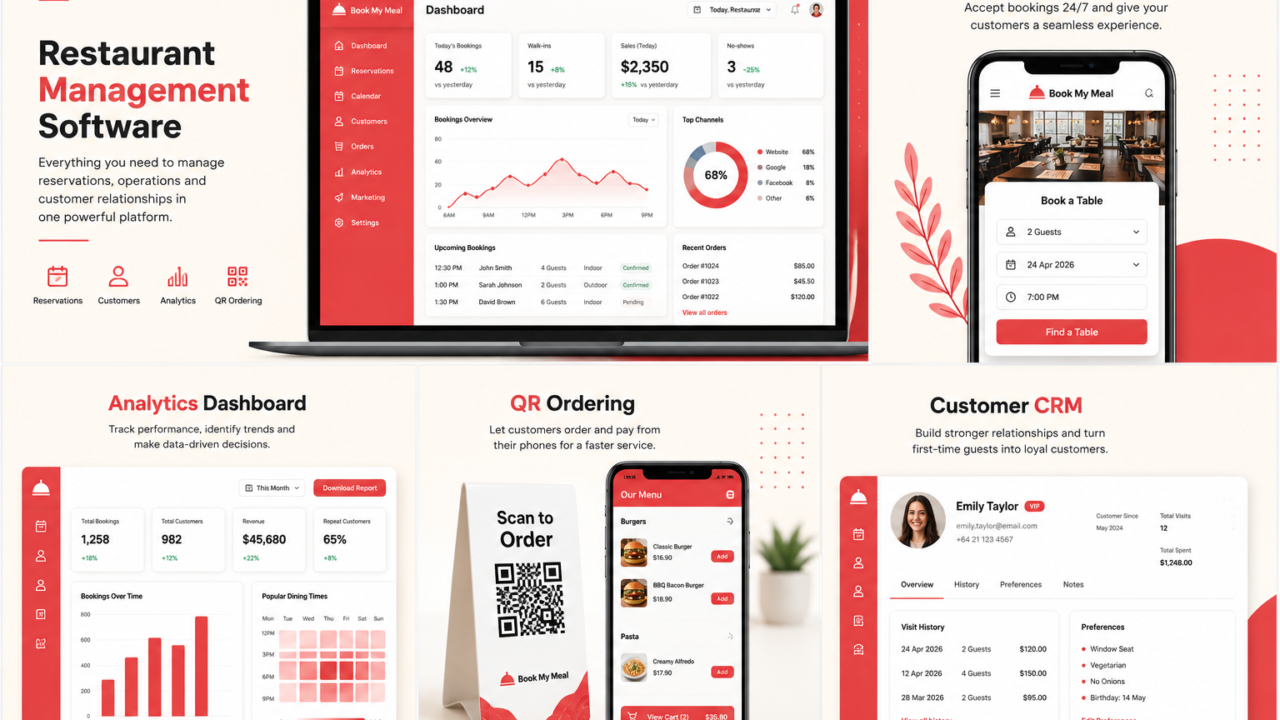
While many businesses begin by investing in Restaurant Booking Software NZ, modern restaurants increasingly require a complete operating platform that combines reservations, customer management, reporting, online ordering, and analytics into one connected system. As restaurants grow, booking software often becomes just one component of a broader restaurant management solution.
Instead of using separate applications for reservations, customer management, reporting, ordering, and operational workflows, restaurants can centralise key functions into one platform.
Think of it as the digital control centre for your restaurant.
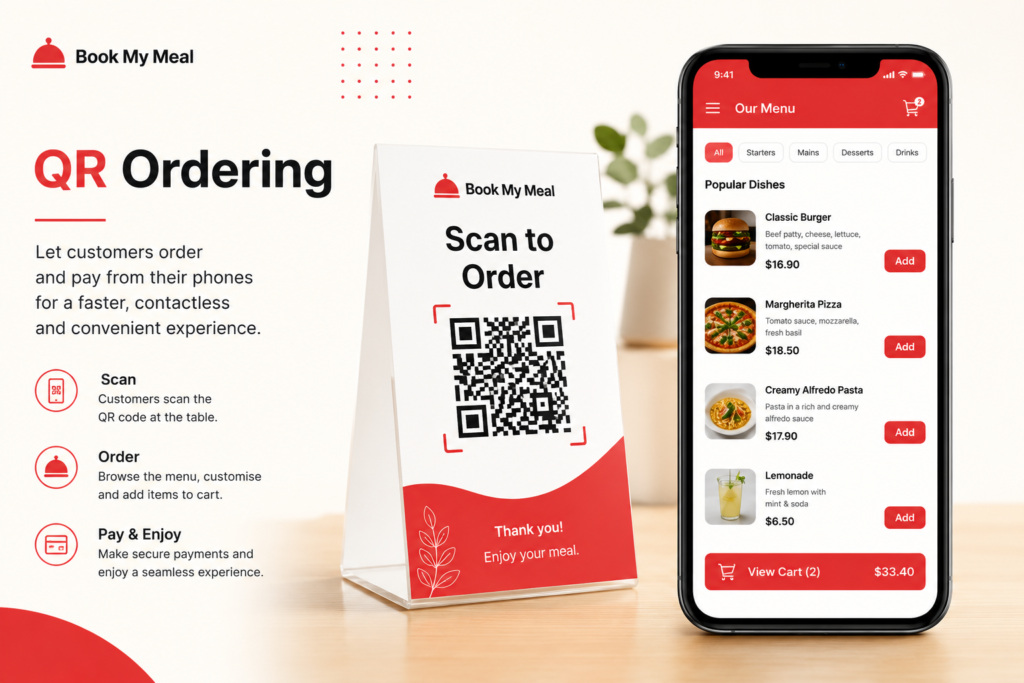
A modern Restaurant Operating System typically combines several capabilities, including:
- Online table reservations
- Table management
- Waitlist management
- Customer relationship management (CRM)
- Online ordering
- QR code ordering
- Kitchen communication
- Sales reporting
- Customer analytics
- Marketing tools
- Staff performance insights
- POS integration
Rather than replacing staff, these systems remove repetitive administrative tasks so teams can spend more time delivering excellent hospitality.
Restaurant Management Software vs Traditional Restaurant Systems
Many restaurants already use some form of technology.
However, there’s an important difference between using software and using an integrated restaurant management platform.
| Traditional Setup | Modern Restaurant Management Software |
|---|---|
| Multiple disconnected systems | One connected platform |
| Manual customer records | Centralised customer profiles |
| Separate reporting | Unified business analytics |
| Limited customer insights | Detailed customer behaviour tracking |
| Basic reservations | Intelligent table management |
| Phone bookings | 24/7 online reservations |
| Paper waitlists | Automated digital waitlists |
| Manual marketing | Customer segmentation and automation |
The difference isn’t simply convenience.
It’s the ability to make better business decisions using accurate, real-time information.
Essential Features Every Restaurant Should Look For
Not all restaurant software delivers the same value.
Before investing, restaurant owners should look beyond attractive dashboards and focus on features that improve daily operations.
Online Reservations
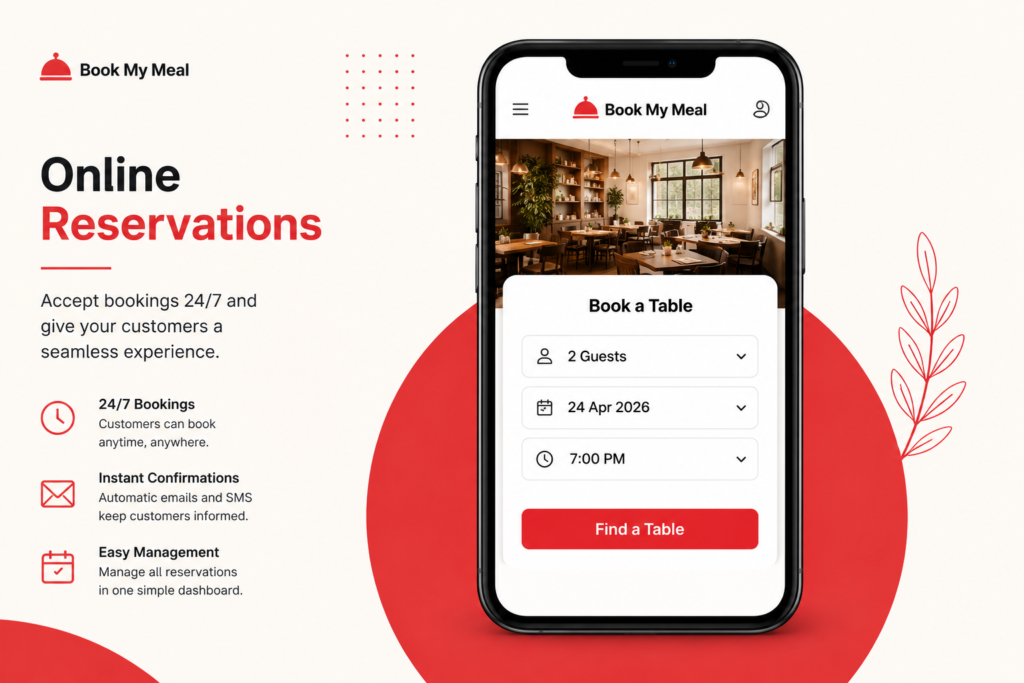
Customers should be able to reserve tables from your website, Google Business Profile, and social media channels without needing to call the restaurant.
If you’d like to explore reservation technology in more detail, read our complete guide to Restaurant Reservation System NZ, where we explain how modern reservation platforms help reduce no-shows, improve table management, and increase direct bookings.
Direct reservations reduce friction while helping restaurants build stronger relationships with their guests.
Smart Table Management
Managing tables manually becomes increasingly difficult during busy service periods.
Modern systems optimise seating by:
- Tracking table availability in real time
- Managing walk-ins
- Reducing idle tables
- Improving seating efficiency
- Handling large group bookings
Better table utilisation often translates directly into higher revenue without increasing seating capacity.
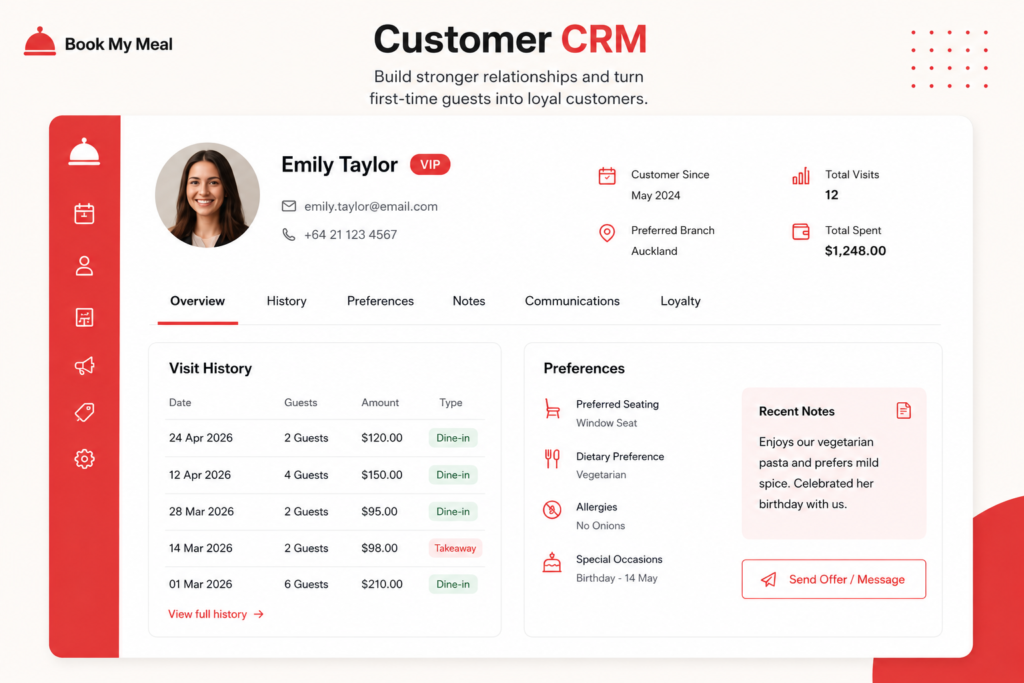
Customer Relationship Management (CRM)
Every booking provides valuable customer insights.
A strong CRM allows restaurants to record:
- Visit history
- Dining preferences
- Allergies
- Special occasions
- Spending patterns
- Feedback
- Loyalty activity
Over time, this data helps restaurants deliver more personalised experiences while encouraging repeat visits.
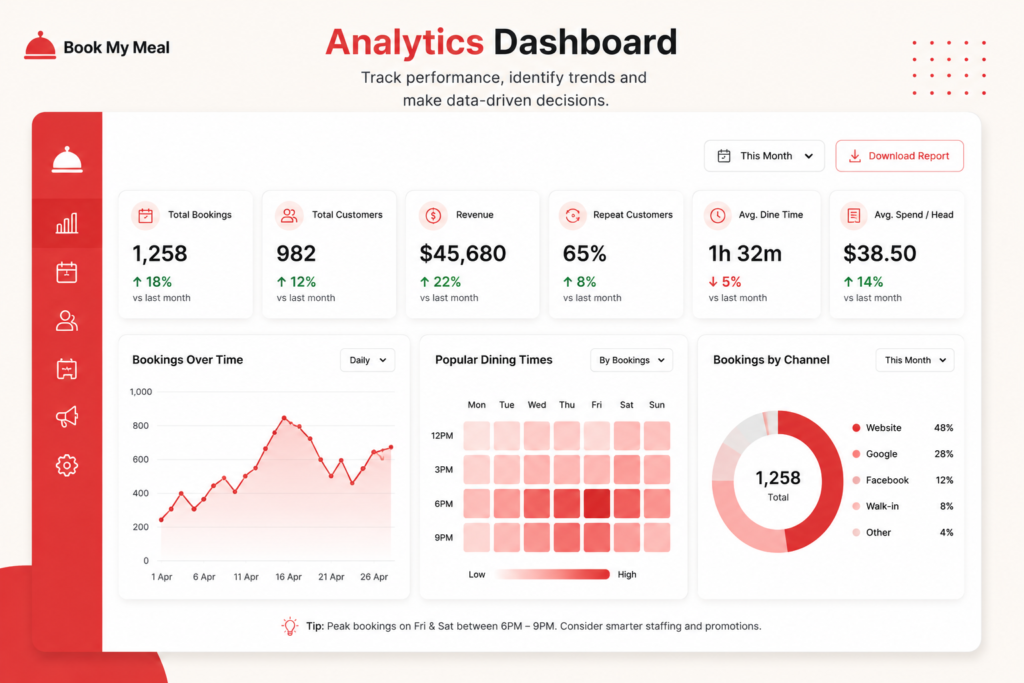
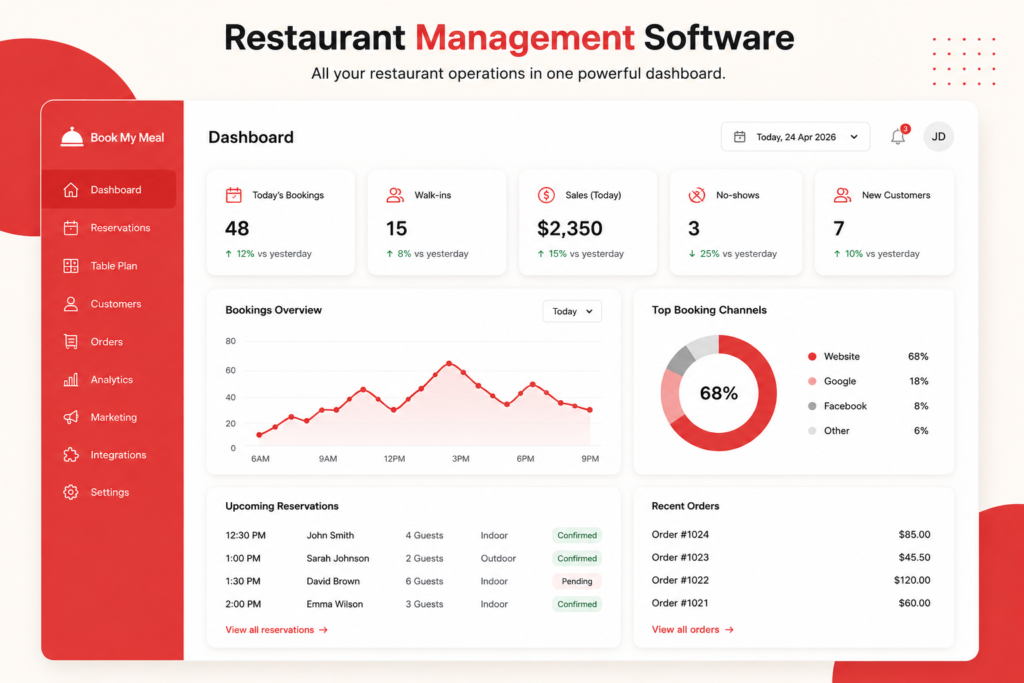
Restaurant Analytics
Good decisions require accurate information.
Modern Restaurant Business Software should provide dashboards showing:
- Booking trends
- Peak dining hours
- No-show rates
- Repeat customer percentage
- Revenue per table
- Customer acquisition channels
- Marketing performance
Instead of relying on intuition, restaurant owners can identify opportunities backed by real business data.
POS Integration
Your reservation system shouldn’t operate independently from your sales system.
Restaurant POS Integration connects customer bookings with transactions, helping restaurants better understand customer behaviour, average spend, and visit frequency while reducing duplicate data entry.
The Benefits of Restaurant Management Software for New Zealand Restaurants
Restaurant technology isn’t just about replacing paperwork with digital tools.
The best restaurant management software helps owners increase efficiency, improve customer satisfaction, and make smarter business decisions.
Let’s look at the biggest advantages.
1. Increase Direct Bookings
One of the biggest challenges many restaurants face is relying heavily on third-party platforms for customer acquisition.
While these platforms can increase visibility, they often become the primary owner of the customer relationship.
Every direct booking through your own website or Google Business Profile allows your restaurant to:
- Build its own customer database
- Reduce dependency on external platforms
- Strengthen customer loyalty
- Improve repeat business
- Collect valuable customer insights
Over time, this creates a sustainable marketing advantage.
Instead of paying repeatedly to acquire the same customer, restaurants can encourage guests to book directly for future visits.
2. Improve Table Utilisation
An empty table during dinner service represents lost revenue that cannot be recovered.
Modern Restaurant Operations Software helps maximise seating efficiency by:
- Displaying real-time table availability
- Preventing double bookings
- Optimising seating arrangements
- Managing walk-ins efficiently
- Handling waitlists automatically
Restaurants often discover they already have the capacity to serve more guests—they simply weren’t managing their tables efficiently.
3. Reduce No-Shows
No-shows continue to be a significant issue for restaurants, particularly during weekends and special occasions.
Even a few missed bookings can impact revenue and staffing efficiency.
Modern reservation systems help reduce no-shows through:
- Automated confirmation emails
- SMS reminders
- Easy booking modifications
- Cancellation management
- Waitlist automation
Instead of empty tables, cancelled reservations can be quickly offered to waiting customers.
4. Understand Your Customers Better
Every reservation creates valuable customer data.
Rather than treating bookings as isolated transactions, modern software builds detailed customer profiles over time.
Restaurants can understand:
- Frequency of visits
- Preferred dining times
- Favourite seating areas
- Average spend
- Dietary requirements
- Birthdays and anniversaries
- Group sizes
- Customer lifetime value
These insights make personalised hospitality possible.
Imagine welcoming a returning customer by remembering their preferred table or favourite wine.
Technology doesn’t replace hospitality.
It enhances it.
5. Make Better Business Decisions
Many independent restaurants still rely on intuition when making operational decisions.
Successful restaurants increasingly rely on data.
A modern Restaurant Operating System can answer questions such as:
- Which days generate the highest revenue?
- Which booking channels perform best?
- What percentage of customers return?
- Which tables generate the highest turnover?
- When should staffing levels increase?
- Which marketing campaigns generate reservations?
Instead of guessing, restaurant owners can optimise operations using real information.
6. Save Hours Every Week
Restaurant owners wear many hats.
Manager.
Marketer.
Recruiter.
Customer service representative.
Accountant.
Technology should reduce workload—not add to it.
By automating repetitive tasks like confirmations, reporting, waitlists, and customer communications, restaurant software gives owners more time to focus on their business.
How to Choose the Right Restaurant Management Software NZ
With dozens of restaurant software providers available, choosing the right solution can feel overwhelming.
Rather than focusing on brand names, evaluate each platform against your business goals.
Is It Built for Restaurants?
Generic booking software often lacks hospitality-specific functionality.
Look for software designed specifically for:
- Restaurants
- Cafés
- Bars
- Fine dining
- Casual dining
- Multi-location hospitality businesses
Industry-specific software understands restaurant workflows far better than generic scheduling platforms.
Can It Grow With Your Business?
Many restaurants start with basic reservation software only to replace it within a few years.
Choose software that can grow alongside your business.
Look for features such as:
- Multi-location management
- Customer CRM
- Marketing automation
- Loyalty programs
- QR ordering
- Online ordering
- POS integration
- Analytics
Buying scalable software today prevents expensive migrations later.
Is It Easy to Use?
The most powerful software becomes useless if staff avoid using it.
Ask yourself:
- Can new staff learn it quickly?
- Is the interface intuitive?
- Can bookings be managed within seconds?
- Is training minimal?
Restaurant teams operate in fast-paced environments.
Simplicity matters.
Does It Integrate With Existing Systems?
Restaurants already use various tools.
Good software should work alongside them.
Consider integration with:
- POS systems
- Accounting software
- Payment gateways
- Google Business Profile
- Website booking widgets
- QR ordering
- Marketing platforms
Disconnected systems create unnecessary work.
Integrated systems eliminate duplication.
Is Customer Support Local?
Hospitality doesn’t stop at 5 pm.
Neither should support.
Choosing a provider with responsive customer service—especially one that understands the New Zealand market—can make a significant difference when issues arise during service.
Restaurant Management Software Checklist
Before choosing a solution, compare vendors against this checklist.
| Feature | Why It Matters |
|---|---|
| Online Reservations | Accept bookings 24/7 |
| Table Management | Maximise seating efficiency |
| Waitlist Management | Reduce lost revenue |
| Customer CRM | Build long-term relationships |
| Restaurant Analytics | Better business decisions |
| POS Integration | Unified customer insights |
| QR Ordering | Faster service |
| Online Ordering | Additional revenue |
| Google Reservation Integration | More direct bookings |
| Marketing Tools | Increase repeat customers |
| Multi-location Support | Future growth |
| Mobile Access | Manage anywhere |
| Reporting Dashboard | Measure performance |
| Customer Support | Resolve issues quickly |
Common Mistakes Restaurants Make When Buying Software
Many restaurant owners purchase software based solely on price.
That can be an expensive mistake.
Avoid these common pitfalls.
Choosing the Cheapest Option
The cheapest software often lacks automation, reporting, integrations, and scalability.
Instead of saving money, restaurants may spend more on multiple subscriptions or manual administration.
Focus on value—not just monthly cost.
Buying Too Many Separate Systems
Restaurants sometimes purchase:
- Reservation software
- CRM
- Loyalty platform
- QR ordering
- Analytics software
- Waitlist software
Each comes with:
- Another login
- Another invoice
- Another training process
- Another data source
An integrated platform simplifies operations.
Ignoring Customer Ownership
Restaurants invest heavily in attracting customers.
But if customer information remains fragmented—or primarily controlled by third-party platforms—it becomes difficult to build lasting relationships.
The restaurants that thrive over the next decade will be those that consistently encourage direct engagement and make good use of the customer insights they collect.
Focusing Only on Today’s Needs
Think about your restaurant two years from now.
Will you:
- Expand?
- Add online ordering?
- Open another location?
- Launch loyalty programs?
- Introduce QR ordering?
Choosing scalable software today can save significant time, cost, and disruption in the future.
Restaurant Technology Is Becoming a Competitive Advantage
Across New Zealand, restaurant owners are facing a common reality:
Margins are tighter.
Labour is harder to find.
Customers expect more convenience.
Competition is stronger.
The restaurants succeeding in this environment aren’t necessarily the ones with the biggest marketing budgets.
They’re the ones using technology to operate more efficiently while delivering a consistently better customer experience.
Modern restaurant management software helps make that possible.
Excellent. This final section is where we naturally introduce Book My Meal as a solution while keeping the article educational. That balance is important for both user trust and long-term SEO.
The Future of Restaurant Management Software in New Zealand
Restaurant technology is evolving rapidly. The software that simply managed reservations a few years ago is now becoming the operational backbone of modern hospitality businesses.
Over the next five years, restaurant owners can expect management software to become even more intelligent and connected.
Here are some of the biggest trends shaping the future.
AI-Powered Customer Insights
Artificial intelligence is beginning to help restaurants understand customer behaviour in ways that were previously impossible.
Rather than simply recording bookings, AI can identify patterns such as:
- Customers most likely to return
- Popular dining times
- High-value customer segments
- Seasonal booking trends
- Menu preferences
- Potential no-show risks
These insights allow restaurants to make smarter marketing and operational decisions.
Greater Automation
Restaurant owners are looking to reduce repetitive manual work.
Future restaurant operating systems will automate even more tasks, including:
- Booking confirmations
- Waitlist management
- Customer follow-ups
- Loyalty rewards
- Marketing campaigns
- Operational reporting
- Inventory notifications
Automation doesn’t replace hospitality—it gives staff more time to focus on guests.
Unified Restaurant Platforms
The industry is moving away from using five or six disconnected applications.
Instead, restaurants increasingly prefer one integrated platform that manages:
- Reservations
- Online ordering
- QR ordering
- Customer relationships
- Marketing
- Reporting
- Analytics
- Payment integration
This reduces software costs, improves data accuracy, and simplifies day-to-day operations.
Better Customer Experiences
Today’s diners expect convenience at every stage of their journey.
That includes:
- Online reservations
- Instant confirmations
- Mobile ordering
- Digital receipts
- Loyalty rewards
- Personalised offers
- Easy rebooking
Restaurants that provide these experiences consistently are more likely to build long-term customer loyalty.
Why More Restaurants Are Choosing Integrated Platforms
For many years, restaurants purchased individual software products to solve individual problems.
One system handled reservations.
Another handled online ordering.
Another managed loyalty.
Another generated reports.
Over time, this created unnecessary complexity.
Every additional platform meant:
- Another monthly subscription
- Another login
- Another integration
- Another training process
- Another database
The result was fragmented operations.
Integrated restaurant management software solves this by bringing key functions together in one platform.
Instead of switching between systems, restaurant owners gain a complete view of their business in one place.
How Book My Meal Supports Modern Restaurants
At Book My Meal, we believe restaurant software should do more than accept bookings.
It should help restaurants build stronger customer relationships, improve operational efficiency, and grow sustainably.
That’s why Book My Meal has been designed as a modern restaurant operating platform rather than simply a reservation tool.
Depending on your restaurant’s needs, the platform can support:
- Unlimited online reservations
- Commission-free direct bookings
- Smart table management
- Customer relationship management (CRM)
- QR code ordering
- Restaurant analytics
- Customer insights
- Online ordering
- Marketing tools
- Future-ready integrations
Instead of managing multiple disconnected systems, restaurants can operate from one central platform.
The goal isn’t just to digitise operations.
It’s to help restaurants own their customer relationships while simplifying daily management.
Trusted by Restaurants Across New Zealand
Choosing restaurant management software is a long-term business decision, and hearing from other restaurant owners can provide valuable confidence before making the switch.
Book My Meal is trusted by hospitality businesses across New Zealand for its commission-free reservations, easy-to-use platform, and responsive local support. You can read verified customer experiences and independent reviews on Trustpilot before making your decision.
Read verified Book My Meal customer reviews on Trustpilot →
https://nz.trustpilot.com/review/bookmymeal.co.nz
Questions to Ask Before Choosing Restaurant Management Software
Before making a decision, ask every software provider these questions.
Can customers book directly through our website?
Direct bookings help strengthen customer relationships and reduce dependence on external booking channels.
Does the software include customer relationship management?
Understanding customer behaviour is becoming increasingly valuable for restaurants.
Can it grow with our business?
Will the software still meet your needs if you open another location or expand your services?
Does it integrate with our existing systems?
Integrations reduce duplicate work and improve operational efficiency.
How responsive is customer support?
Restaurant software becomes mission-critical during busy service periods.
Reliable support matters.
Frequently Asked Questions
What is Restaurant Management Software?
Restaurant Management Software is an integrated platform that helps restaurants manage reservations, customer relationships, reporting, operations, online ordering, and other day-to-day business activities from one system.
Why do restaurants need Restaurant Management Software?
It helps reduce manual work, improve customer experience, optimise table utilisation, increase operational efficiency, and make better business decisions using real-time data.
What is the difference between Restaurant Management Software and a POS system?
A POS system primarily processes transactions.
Restaurant Management Software typically includes reservations, CRM, customer insights, analytics, marketing tools, table management, online ordering, and integrations—including POS connectivity.
Can small restaurants benefit from Restaurant Management Software?
Yes.
Independent cafés, restaurants, and small hospitality businesses often benefit significantly because automation reduces administrative workload while improving customer service.
Is cloud-based Restaurant Management Software better?
Cloud-based platforms allow restaurant owners to access bookings, reports, customer information, and operational data from anywhere while ensuring updates are available automatically.
Does Restaurant Management Software integrate with POS systems?
Many modern platforms support POS integration, allowing restaurants to combine reservation data with transaction information for better reporting and customer insights.
How much does Restaurant Management Software cost in New Zealand?
Pricing varies depending on features, business size, and the software provider.
When comparing options, consider the total value delivered—including automation, customer management, analytics, integrations, and support—rather than focusing only on the monthly subscription cost.
Final Thoughts
The hospitality industry continues to evolve.
Customer expectations are changing.
Operational costs remain under pressure.
Competition continues to increase.
Technology alone won’t make a restaurant successful.
Great food, excellent service, and memorable experiences will always remain at the heart of hospitality.
However, the right technology gives restaurant owners better tools to deliver those experiences consistently while operating more efficiently.
Whether you’re running a neighbourhood café, a busy family restaurant, or a growing hospitality group, investing in modern Restaurant Management Software NZ is becoming less about keeping up with technology—and more about building a resilient, future-ready business.
Choosing an integrated platform that supports reservations, customer relationships, reporting, and operations can help restaurants spend less time managing systems and more time focusing on what matters most: their guests.
Ready to Modernise Your Restaurant?
If you’re looking for a simple, affordable way to manage reservations, customer relationships, and restaurant operations from one platform, Book My Meal is built with New Zealand restaurants in mind.
From commission-free online reservations to smart table management, QR ordering, customer insights, and analytics, Book My Meal helps restaurants simplify operations while building stronger direct relationships with their customers.
Book a free demo today and discover how the right restaurant management software can help your restaurant grow.